
FX Aegis Ultra
Most of the route is fine. It is the loading dock in February, the gravel between buildings, and the grade behind the plant that decide whether a legged robot is useful to you or just interesting.
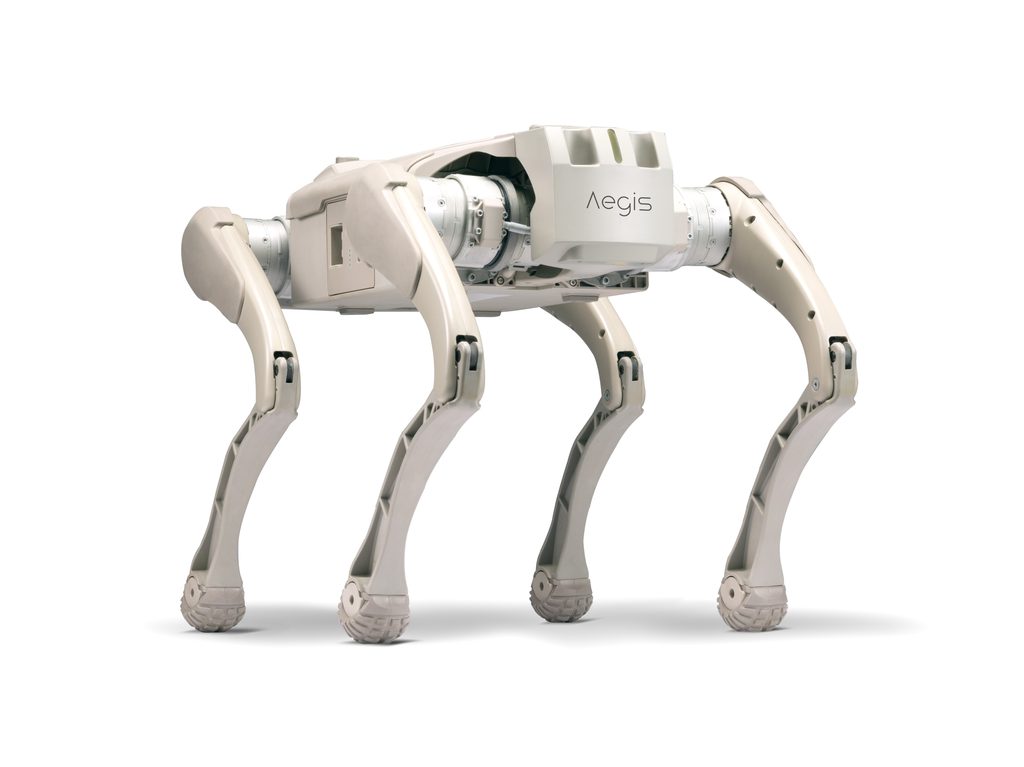
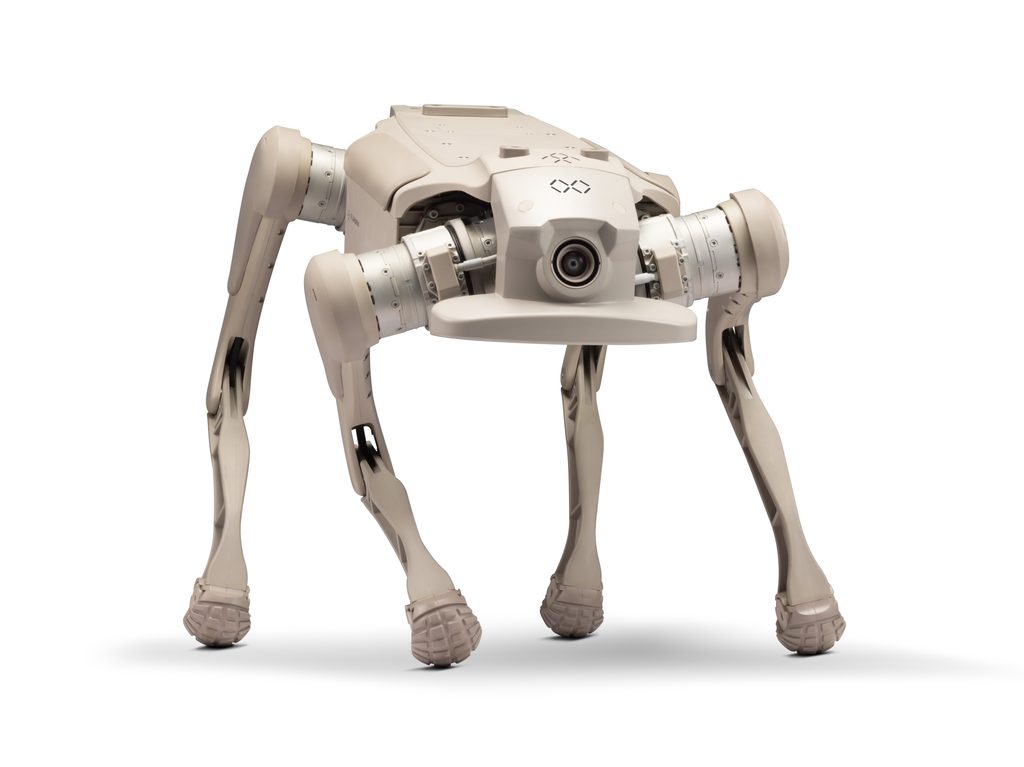
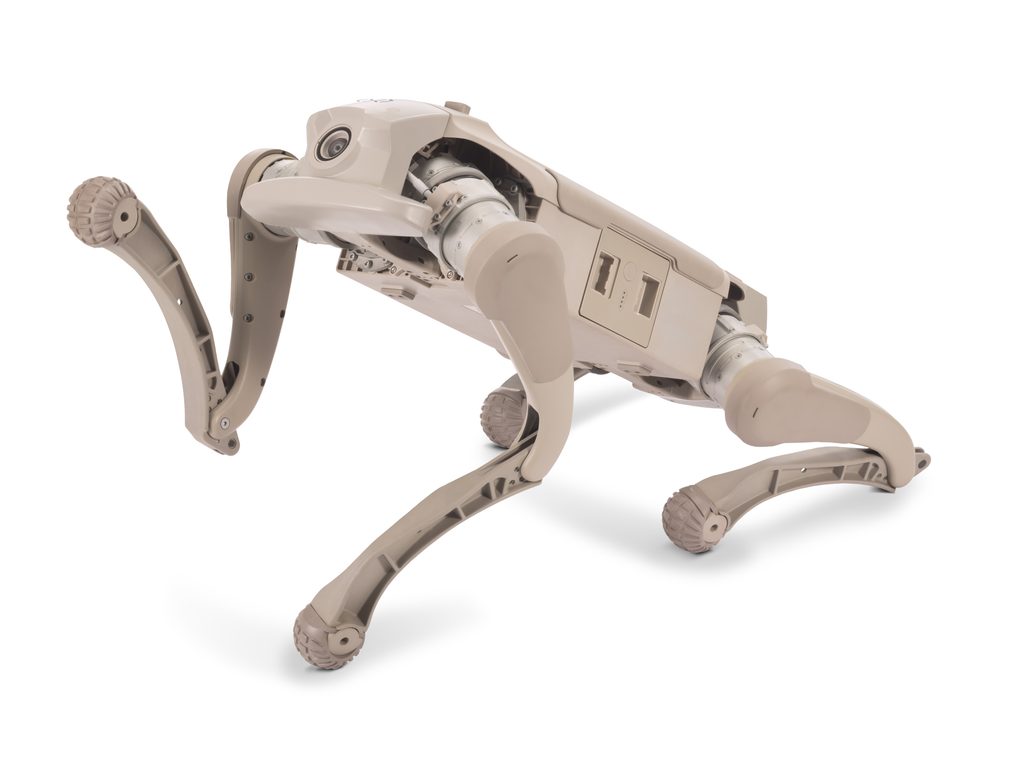
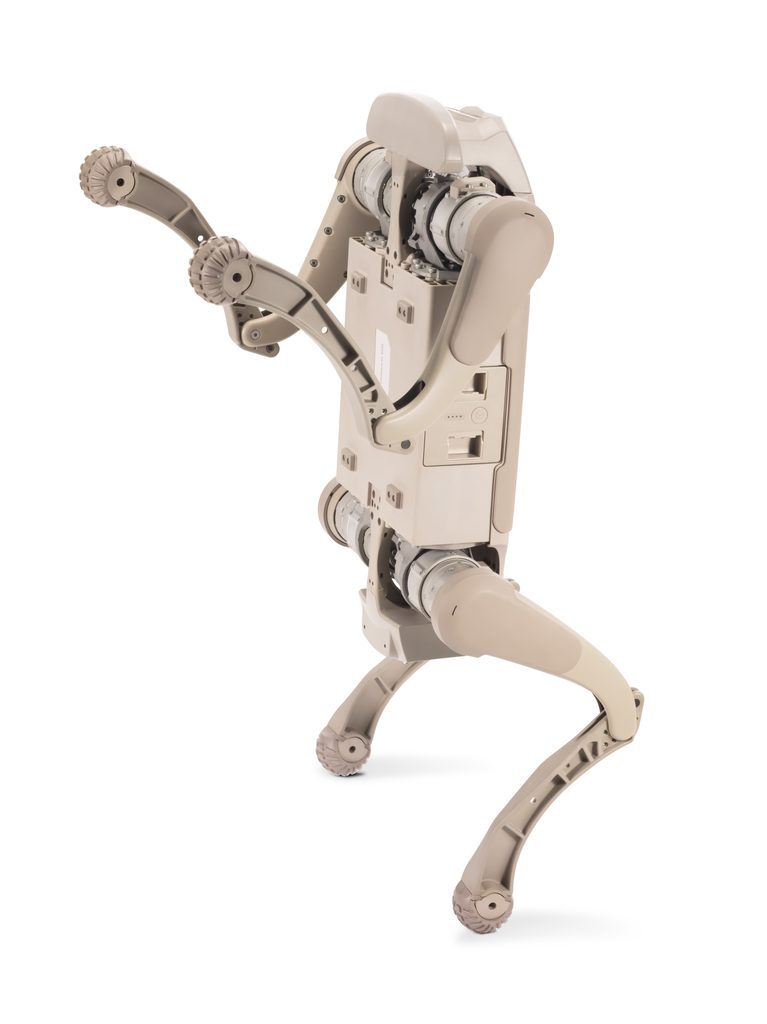
The Aegis Ultra is the industrial configuration of the Aegis series. It is rated IP54 for semi-outdoor and industrial settings, runs at up to 5 m/s, handles grades of 30 to 40 degrees, and carries up to 10 kg. Four expansion interfaces support 3D radar, depth cameras, RTK, and 4G modules, and development runs on a full SDK with standardized APIs, Python, and Isaac Sim.
WEIGHT
16 kg
DEGREES OF FREEDOM
12 DOF
MAXIMUM SPEED
5.0 m/s
PAYLOAD
10 kg maximum
RUNTIME
1 to 2 hours
SLOPE CAPACITY
30 to 40°
The work
The one built to leave the lobby
Faraday Future positions the Aegis Ultra for security, inspection, research, and AI development. Three things separate it from the rest of the series: the IP54 rating, the faster gait and steeper grade capability, and the hardware interfaces that let real perception equipment go on top of it.
That last one is where the work actually happens. A quadruped without sensors is a platform looking for a job. The Ultra supports 3D radar, depth cameras, RTK positioning, and 4G modules through Ethernet, two USB ports, SBUS, and UART, and it carries 10 kg to hold them. What you mount on it is the deployment.
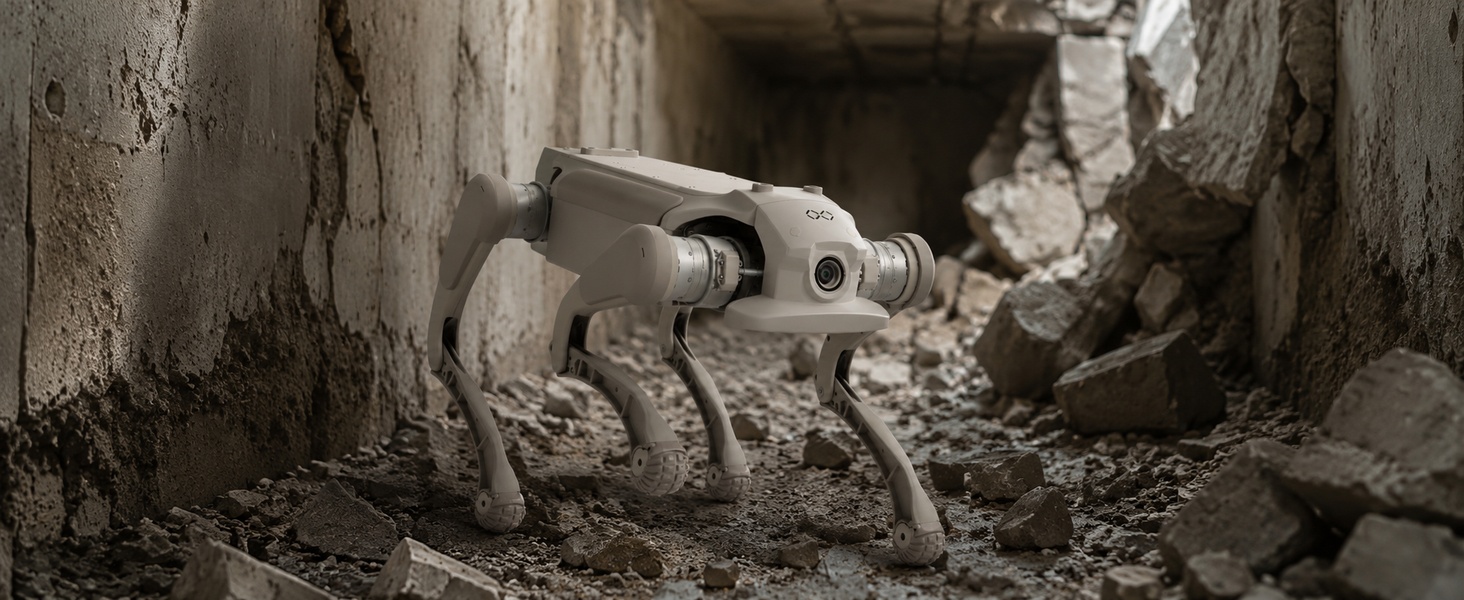
IP54 Rated
Rated by the manufacturer for semi-outdoor and industrial settings where dust and moisture are present, and described as an upgrade over the IP32 rating on the rest of the series.
Speed and grade
Up to 5 m/s with slope capability stated at 30 to 40 degrees, obstacle clearance to 35 cm, and 48 N·m of peak joint torque.
Perception expansion
Support for 3D radar, depth camera, RTK, and 4G modules through Ethernet, two USB ports, SBUS, and UART, with 10 kg of payload to carry them.
Full development
SDK and standardized APIs, Python, Isaac Sim simulation support, an advanced visual programming platform, and the Openclaw no-code tool.
IN THE BOX
What comes with the system
These are compact humanoid systems, 1310 mm tall and under 40 kg. They walk, they hold a conversation, and they are built to be programmed. They are not material handling equipment, and the payload figure below is the honest limit on that.
- One quadruped robot device
- One pad controller
- App connection
- Ecosystem Skill Package, which carries the items below
- Ten or more preloaded dynamic motions
- Real-time 4K video streaming
- Full secondary development through SDK, standardized APIs, and Isaac Sim
- Advanced visual programming platform with Python code support
- Openclaw no-code development tool
- Simulation development platform
- Over-the-air update capability
Not included. Perception modules, spare batteries, the touchscreen controller, and the charging dock are all purchased separately. Say early which of them belong in your deployment so the quote covers them.
Listed as in development
Faraday Future lists the following as not yet released, to be delivered by future over-the-air update. They are not available at purchase.
- Autonomous navigation
- Environmental scanning and patrol
- Self-charging capability, with the charging dock sold separately
Optional add-ons
FX Aegis battery
216 Wh lithium-ion, roughly 1.5 hours to a full charge, 1 to 2 hours of runtime. Compatible with the Ultra and the Ultra variants. On a route that takes an hour, the spare is not optional.
FX Aegis FHD touchscreen controller
A 5.5 inch FHD touchscreen with Hall-effect joysticks, connecting over Wi-Fi 5.
PHOTOS
See the robot, in action
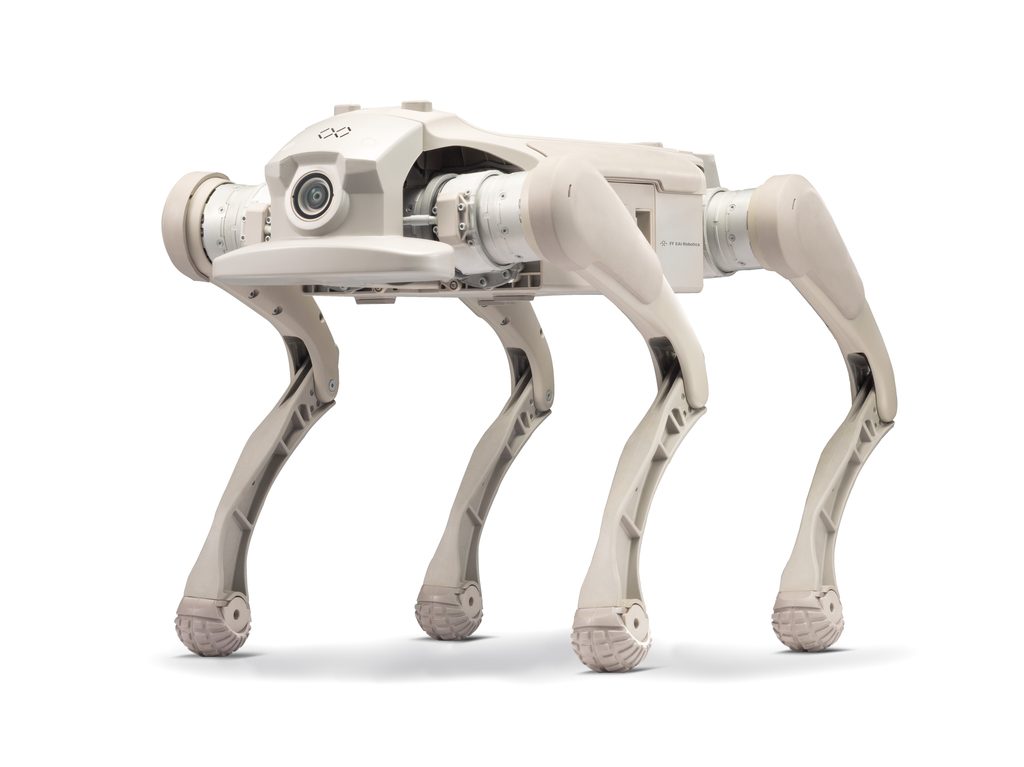
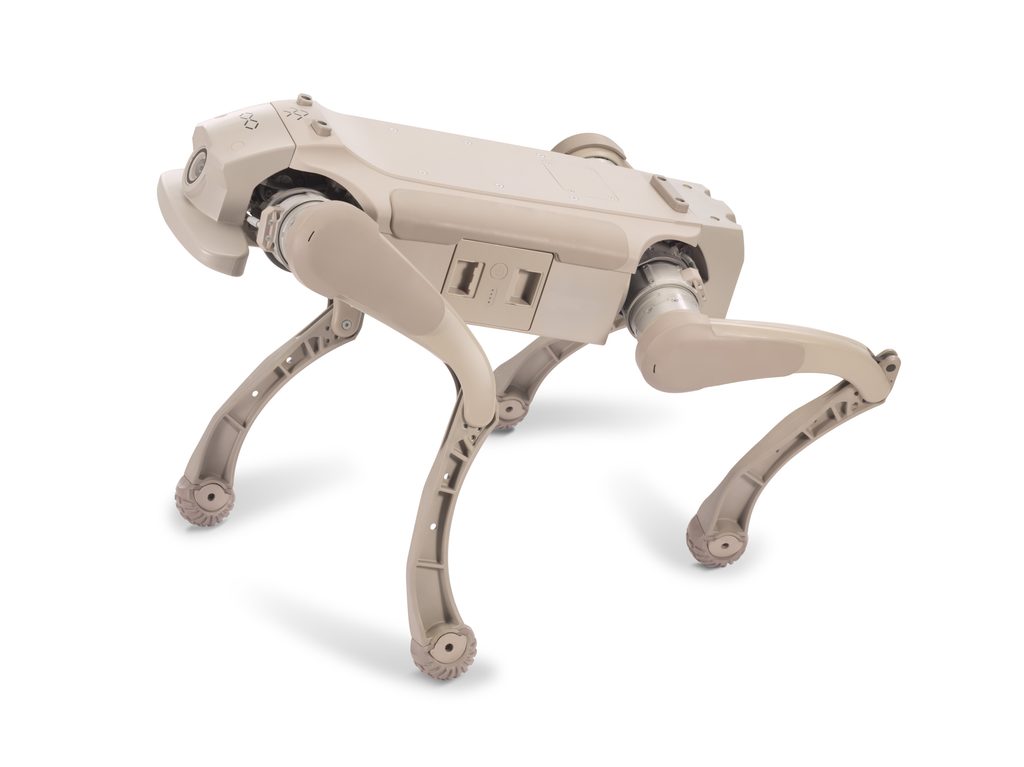
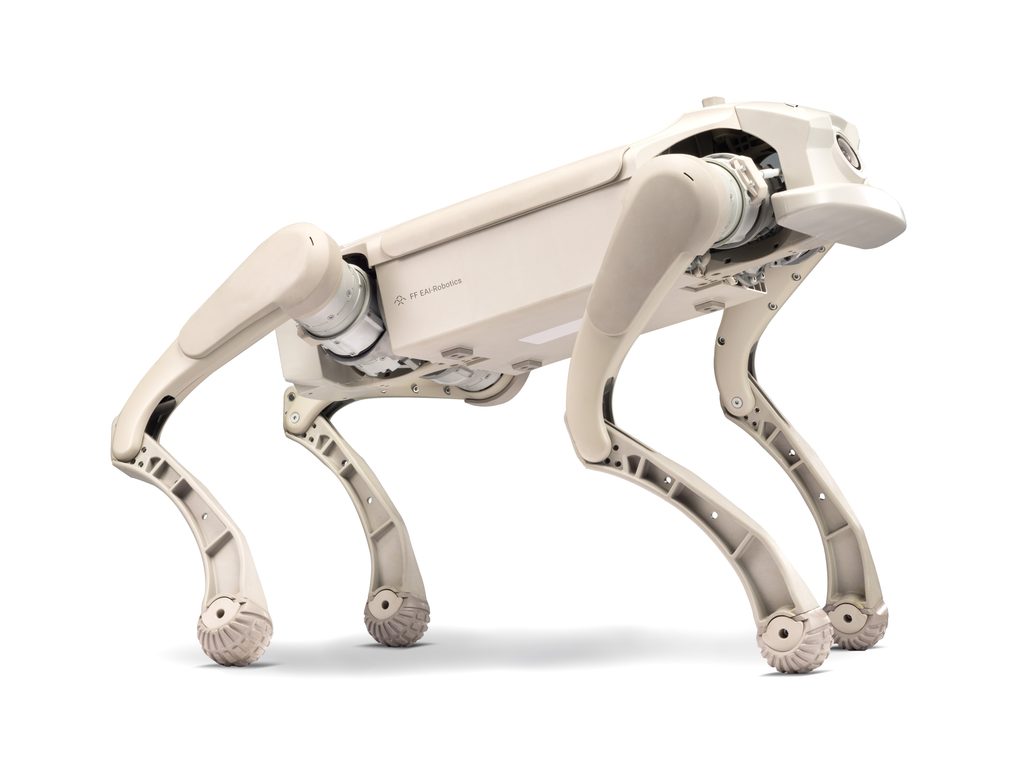
Specifications
FX Aegis Ultra specifications
Every figure below is supplied by Faraday Future. These are the manufacturer’s measurements under its own test conditions, not ours. Performance in your space will vary with surface, temperature, load, and duty cycle.
| Physical | |
|---|---|
| Dimensions standing (L × W × H) | 630 × 360 × 420 mm |
| Weight | 16 kg |
| Materials | Aluminum alloy and high-strength engineering plastics |
| Degrees of freedom | 12 DOF |
| Payload | 10 kg maximum |
| Maximum joint torque | 48 N·m |
| IP rating | IP54 |
| Movement | |
|---|---|
| Maximum movement speed | 5.0 m/s |
| Slope capability | 30 to 40 degrees |
| Continuous stair climb height | 16 cm |
| Obstacle clearance height | 35 cm maximum |
| Power | |
|---|---|
| Battery capacity | 216 Wh |
| Battery detail | Rated 5 Ah, nominal 4.6 Ah, 43.2 V |
| Runtime | 1 to 2 hours |
| Charging time | 1 hour |
| Rated power | 3500 W maximum |
| Operating voltage | Approximately 43.2 V |
| Input voltage | 110 V to 220 V |
| Sensing and interface | |
|---|---|
| Cameras | 4K wide-angle camera with real-time video streaming |
| IMU | Equipped |
| Supported perception modules | 3D radar, depth camera, RTK, and 4G modules. Purchased separately |
| Connectivity and expansion | |
|---|---|
| Telecommunication | Wi-Fi, Bluetooth |
| Expansion ports | Ethernet, two USB, SBUS, and UART |
| Controller | Pad controller included |
| App connection | Included |
| Capability | |
|---|---|
| Preloaded motions | Ten or more dynamic motions |
| Onboard AI | Described by the manufacturer as built-in. No further detail published |
| Autonomous navigation | In development |
| Environmental scanning and patrol | In development |
| Self-charging | In development. Charging dock sold separately |
| Over-the-air updates | Supported |
| Software and development | |
|---|---|
| Secondary development | SDK and standardized APIs, with Python development |
| Simulation | Isaac Sim environment support, plus a robot simulation development platform |
| Visual programming | Advanced visual programming platform with Python code support |
| Openclaw development tool | Supported |
| Intended use | |
|---|---|
| Manufacturer stated purpose | Security, inspection, research, and AI development |
Specifications
If you are evaluating this for an agency or a facility
This is the model in the series Faraday Future names for security and inspection work, so it is worth being plain about what that does and does not mean today.
The unit is operated. Autonomous navigation and patrol are listed as future over-the-air capabilities and are not available at purchase. An operator runs the route, and the 4K camera streams what it sees.
What the unit carries is what makes it useful. A route survey needs different modules than a thermal check or a perimeter walk, and those modules are separate purchases with separate integration work. That is the conversation to have before the hardware conversation.
We will not tell you a deployment prevents incidents, protects officers, or reduces risk. We do not know that, nobody does, and a vendor who says otherwise is selling you something they cannot deliver.
What we will do is describe what the system can do, under what conditions, and tell you plainly when your use case is outside them. Some of them will be. Stairs are the most common one.
WHAT WE ADD
The hardware is where it starts
We are the distributor, and we are also the secondary developer and integrator. On this model most of the value is in the integration, because the robot as shipped is a platform and the deployment is what goes on it.
Module integration
We specify, mount, wire, and integrate the perception modules your route calls for, against the SDK and the expansion ports.
On-site integration
We install in person, work through your network and facility policy, and test on the actual route rather than in a demonstration space.
Operator training
Your people run the system before we leave, including what to do when conditions change mid route. We stay reachable after that.
Procurement
What your purchasing office will ask for
Pricing depends on the number of units, the perception modules you need, spare batteries, the secondary development your route calls for, and whether installation and training are included. We put the whole thing in writing rather than quoting hardware alone.
Purchase orders are placed with Stokes Family Holdings, LLC, doing business as MOSO Robotics.
If you are working toward a fiscal year close or a grant deadline, tell us the date. It changes what we prioritize.
Ask us for
Manufacturer specification sheets for the exact model quoted
Current FCC certification and Covered List documentation
SDK and API documentation, so your team can scope the work before it buys
A written scope covering configuration, installation, and training
Camera and video streaming details, for your privacy and network review
Tell us what the robot needs to do
Describe the task and the space. We will tell you what fits, and we will tell you if nothing does.