
FX Navi
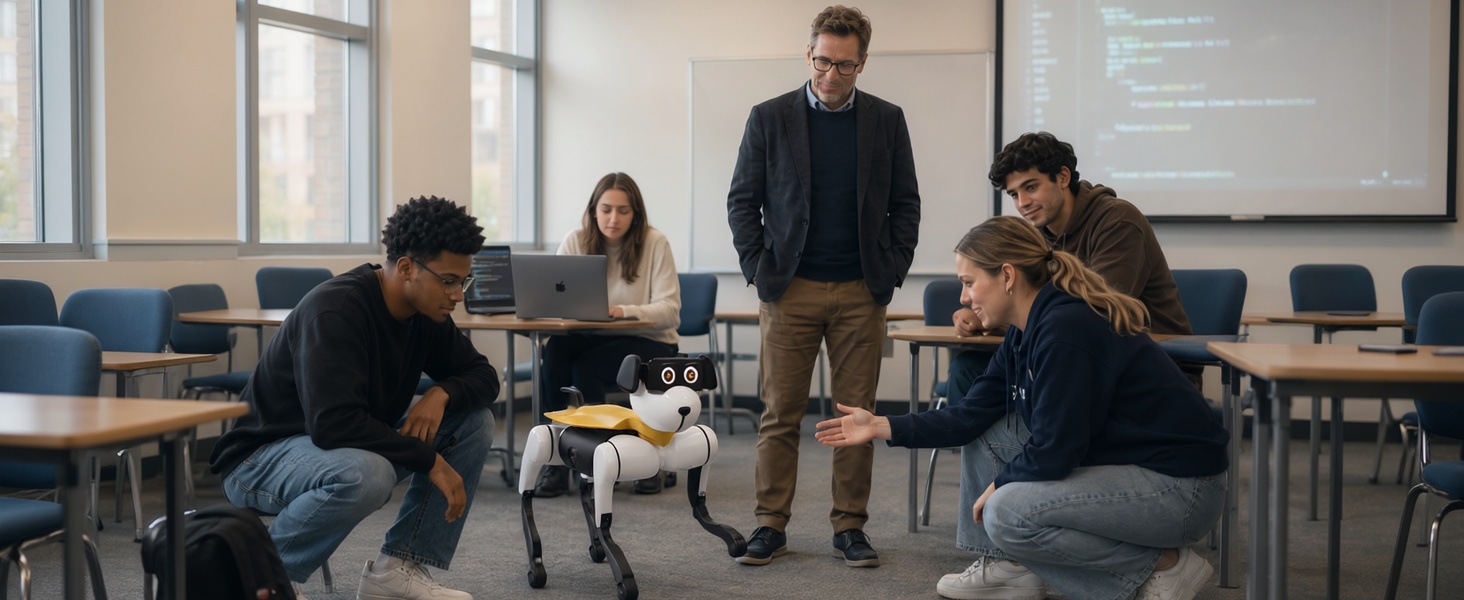
A legged robot is the easiest way to teach the hard parts of robotics. Balance, gait, and perception stop being diagrams the moment something has to stay upright while it walks across a classroom floor.
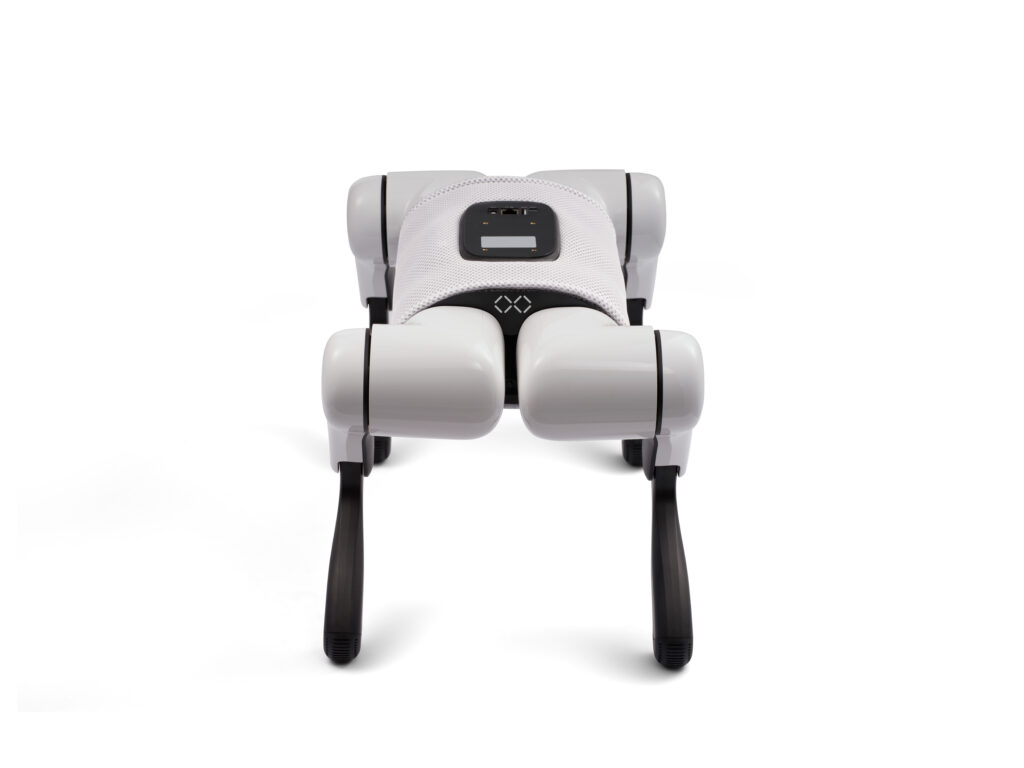
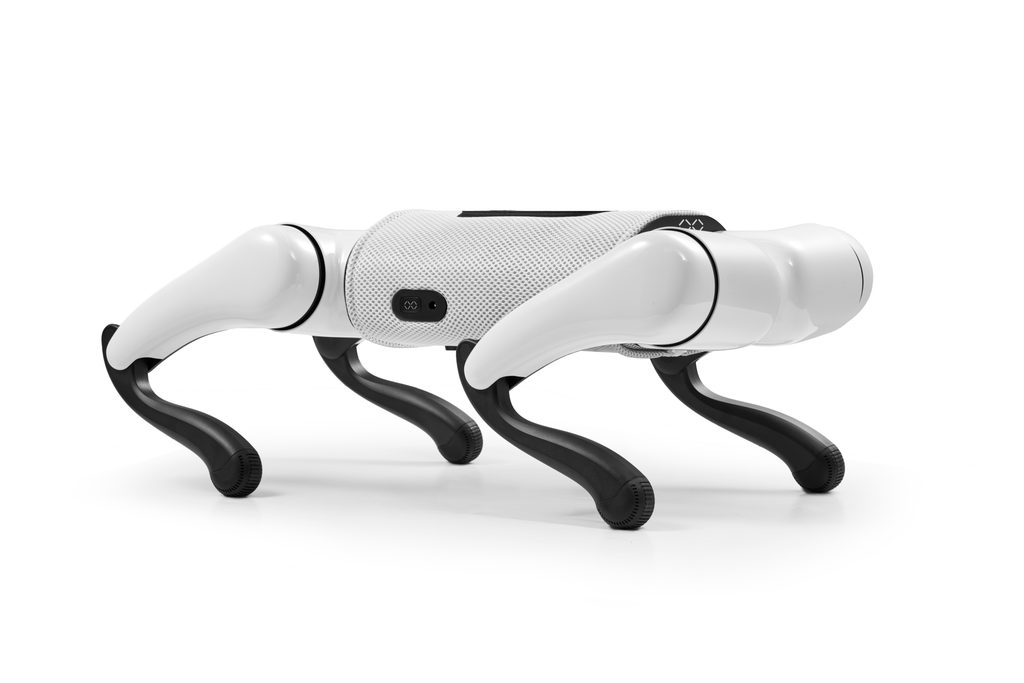
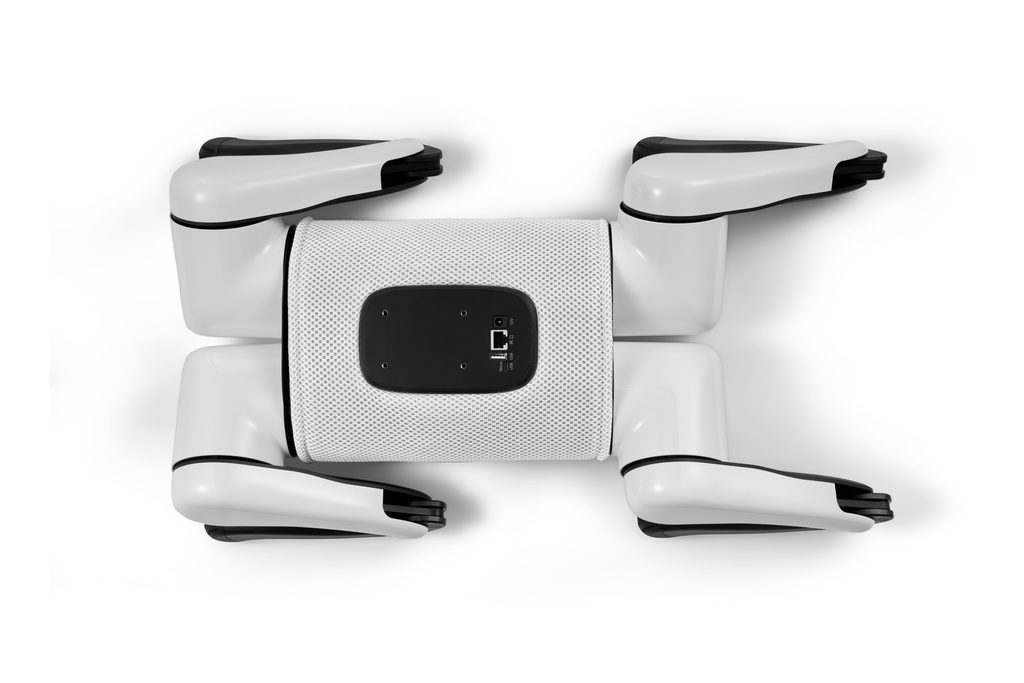
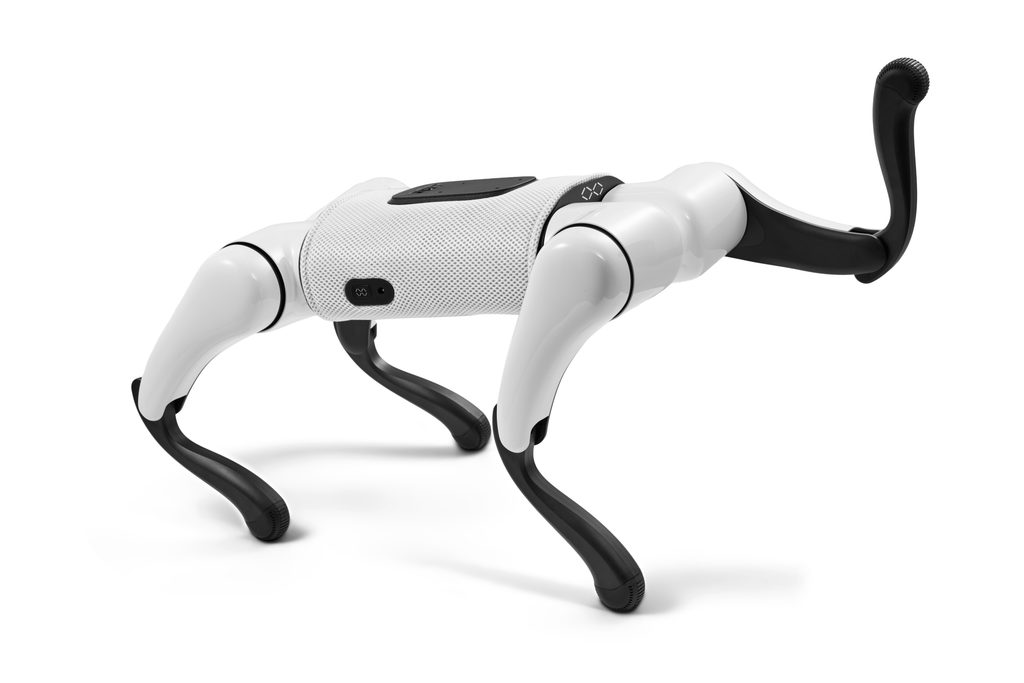
The FX Navi is a compact quadruped, roughly 8 kg, with 12 degrees of freedom and dynamic gait balance. It walks at up to 2 m/s, rotates at up to 360 degrees per second, and clears obstacles up to 34 cm on indoor flat ground. The low-level interface is open, the Python SDK is included, and there are four expansion ports on its back with 5 V and 12 V power for whatever your students or your lab decide to bolt to it.
WEIGHT
Approximately 8 kg
DEGREES OF FREEDOM
12 DOF
MAXIMUM SPEED
2 m/s
OBSTACLE CLEARANCE
34 cm
RUNTIME
Approximately 2 hours
ROTATION
360° per second
The work
Small enough to carry, open enough to build on
The FX Navi is built for education, research, and embodied AI development. At roughly 8 kg it is light enough that one person can move it between rooms, and small enough that a lab bench is a working area rather than a staging problem.
It runs a Linux system developed by Faraday Future with a localized interface. The manufacturer states the AI stack uses a US-local large language and vision language model supporting 50 languages, delivered through a paired smartphone and app. What matters most for a program is that the low-level interface is open: motion control, perception, and hardware expansion APIs are all available through a Python SDK, so a team can work at whatever depth it wants.
Movement
12 degrees of freedom with dynamic gait balance. Walking, turning, and obstacle clearance to 34 cm on indoor flat ground, at up to 2 m/s.
Interaction
Multilingual voice interaction, roughly ten expressions, and five or more biomimetic behaviors. Voice, personality, and profile settings are customizable.
Expansion
Four back-bolt mounting points, 5 V and 12 V power output, and a USB port. Add the sensors your curriculum or your research actually calls for.
Development
Open low-level interface and a Python SDK, with motion control, perception, and hardware expansion APIs open for secondary development.
IN THE BOX
What comes with the system
These are compact humanoid systems, 1310 mm tall and under 40 kg. They walk, they hold a conversation, and they are built to be programmed. They are not material handling equipment, and the payload figure below is the honest limit on that.
- One quadruped robot device
- One remote controller
- One charger, US-spec plug
- Phone app connection and multilingual voice interaction through the app
- Open low-level interface and Python SDK
- Motion control, perception, and hardware expansion APIs
- Over-the-air update and version management
Not included. The automatic charging dock is purchased separately, and a smartphone is required for perception and voice interaction but is not supplied. Say early if either belongs in your deployment so the quote covers it.
Optional add-ons
Faraday Future lists the following separately from the base unit. Prices are the manufacturer’s published figures and are subject to change.
- Lifetime Premium Development & Skills Package, $390 one time. Unlocks Brain Blocks visual sequencing, Create Studio, EAI Studio, SDK and API access, simulation, and the skill ecosystem.
- EAI Curriculum Skill Foundation, from $490 per year. A structured nine-level embodied AI curriculum with up to five lessons per week.
PHOTOS
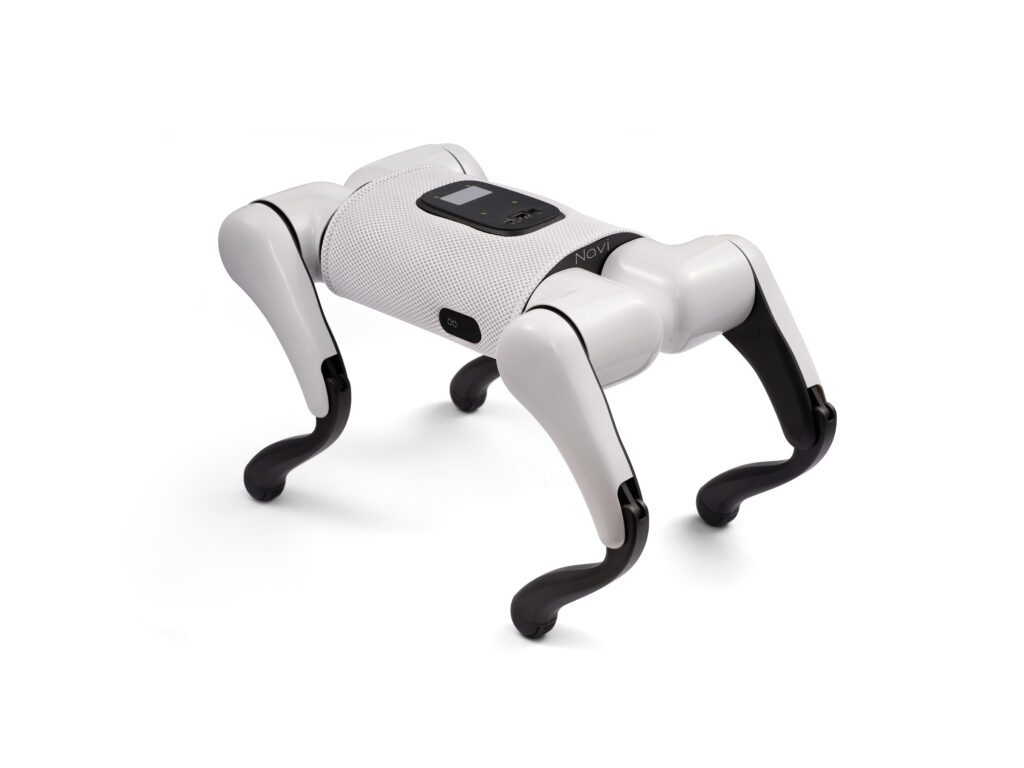
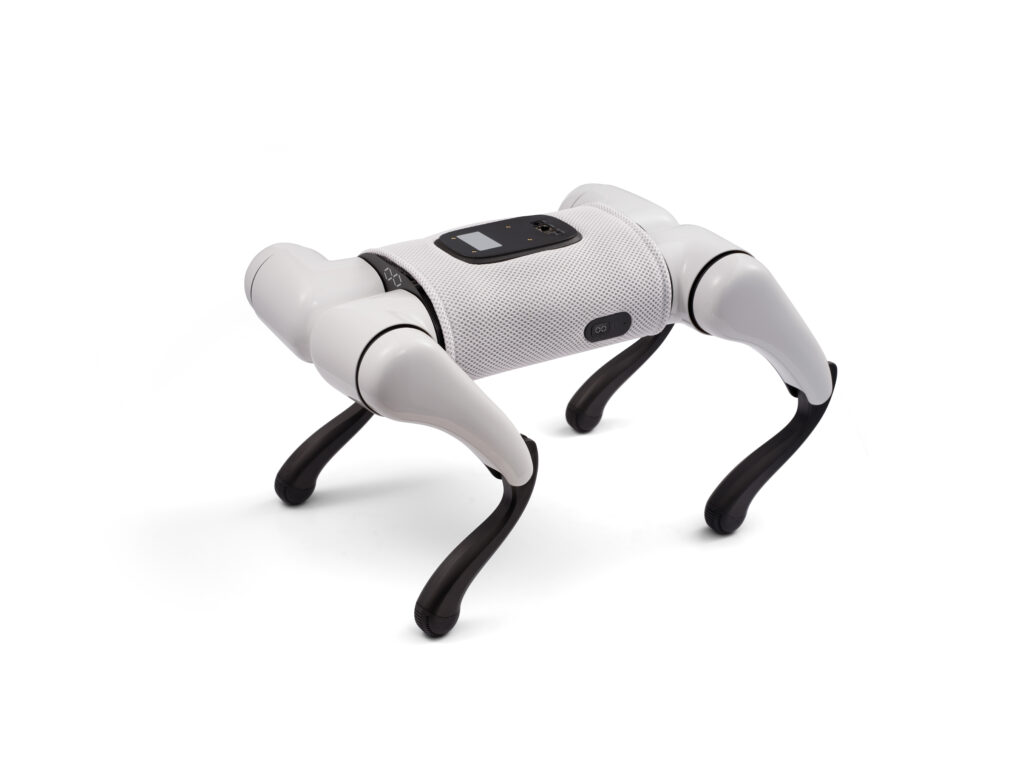
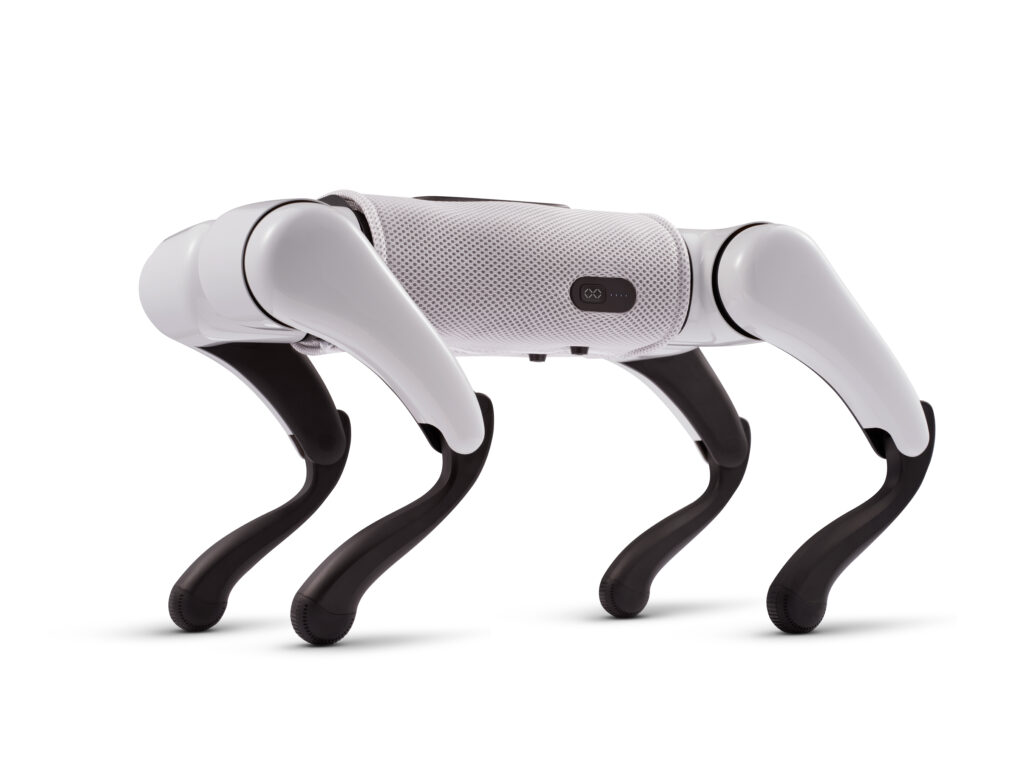
See the robot, in action
Specifications
FX Navi specifications
Every figure below is supplied by Faraday Future. These are the manufacturer’s measurements under its own test conditions, not ours. Performance in your space will vary with floor surface, temperature, load, and duty cycle.
| Physical | |
|---|---|
| Dimensions | 112 mm folded, 308 mm standing, by 298 mm by 515 mm |
| Weight | Approximately 8 kg (17.6 lb) |
| Degrees of freedom | 12 DOF |
| Payload capacity | Light payload, no figure published |
| Movement | |
|---|---|
| Maximum movement speed | 2 m/s (7.2 km/h, 4.47 mph) |
| Maximum rotation speed | 360 degrees per second |
| Maximum obstacle clearance | 34 cm (13.4 in) |
| Terrain adaptability | Indoor flat ground, dynamic gait balance |
| Power | |
|---|---|
| Power source | Built-in lithium battery |
| Battery capacity | Approximately 0.2 to 0.3 kWh |
| Runtime | Approximately 2 hours continuous |
| Charging method | Direct charging with US-spec plug. Automatic charging dock optional, purchased separately |
| Input voltage | Compatible with US household power |
| Battery safety | Over-current, over-voltage, and over-temperature protection |
| External power outputs | 5 V and 12 V output, plus USB port |
| Sensing and interface | |
|---|---|
| Onboard perception sensors | None. Perception operates through a paired smartphone camera, microphone, and display |
| Voice and audio interaction | Through the paired smartphone and app |
| Display and expression | Through the paired smartphone and app. Approximately ten expressions |
| Biomimetic motions | Five or more behaviors |
| Wake-word-free interaction | Supported. The manufacturer describes this as US-compliant for privacy |
| Connectivity and control | |
|---|---|
| Wireless connectivity | Wi-Fi, Bluetooth, 4G, and 5G, described by the manufacturer as US compliant |
| Remote control | Mobile app and remote controller |
| Expansion ports | Four back bolts, 5 V and 12 V power output, and a USB port for sensor and hardware expansion |
| Software and development | |
|---|---|
| Operating system | Linux with localized interface, developed by Faraday Future |
| AI computing platform | Not disclosed by the manufacturer |
| AI model stack | US-local large language and vision language model, 50 languages, through the smartphone and app |
| Autonomy level | Command driven |
| Learning and adaptation | Basic learning through over-the-air upgrades |
| Secondary development | Open low-level interface and Python SDK, with motion control, perception, and hardware expansion APIs |
| Over-the-air updates | Supported, with version management |
| Intended use | |
|---|---|
| Manufacturer stated purpose | Education, research, and AI development |
WHAT WE ADD
The hardware is where it starts
We are the distributor, and we are also the secondary developer and integrator. On an open platform, that means your program starts from something that already works rather than from an SDK and a wish.
Secondary development
We build against the low-level interface and the Python SDK, including sensor work on the expansion ports, so the unit does your task before your students touch it.
On-site integration
We install in person, work through your network and device policy, and test in the room where it will run.
Operator training
Your instructors and staff run the system before we leave, and we stay reachable after that.
Procurement
What your purchasing office will ask for
Pricing depends on the number of units, the add-ons you need, the secondary development your program calls for, and whether installation and training are included. We put the whole thing in writing rather than quoting hardware alone.
Purchase orders are placed with Stokes Family Holdings, LLC, doing business as MOSO Robotics.
If you are working toward a grant deadline or a budget cycle, tell us the date. It changes what we prioritize.
Ask us for
Manufacturer specification sheets for the exact model quoted
Current FCC certification and Covered List documentation
Warranty terms and what they do and do not cover
A written scope covering configuration, installation, and training
Lead time and what it depends on
Tell us what the robot needs to do
Describe the task and the space. We will tell you what fits, and we will tell you if nothing does.