
Master Ultra
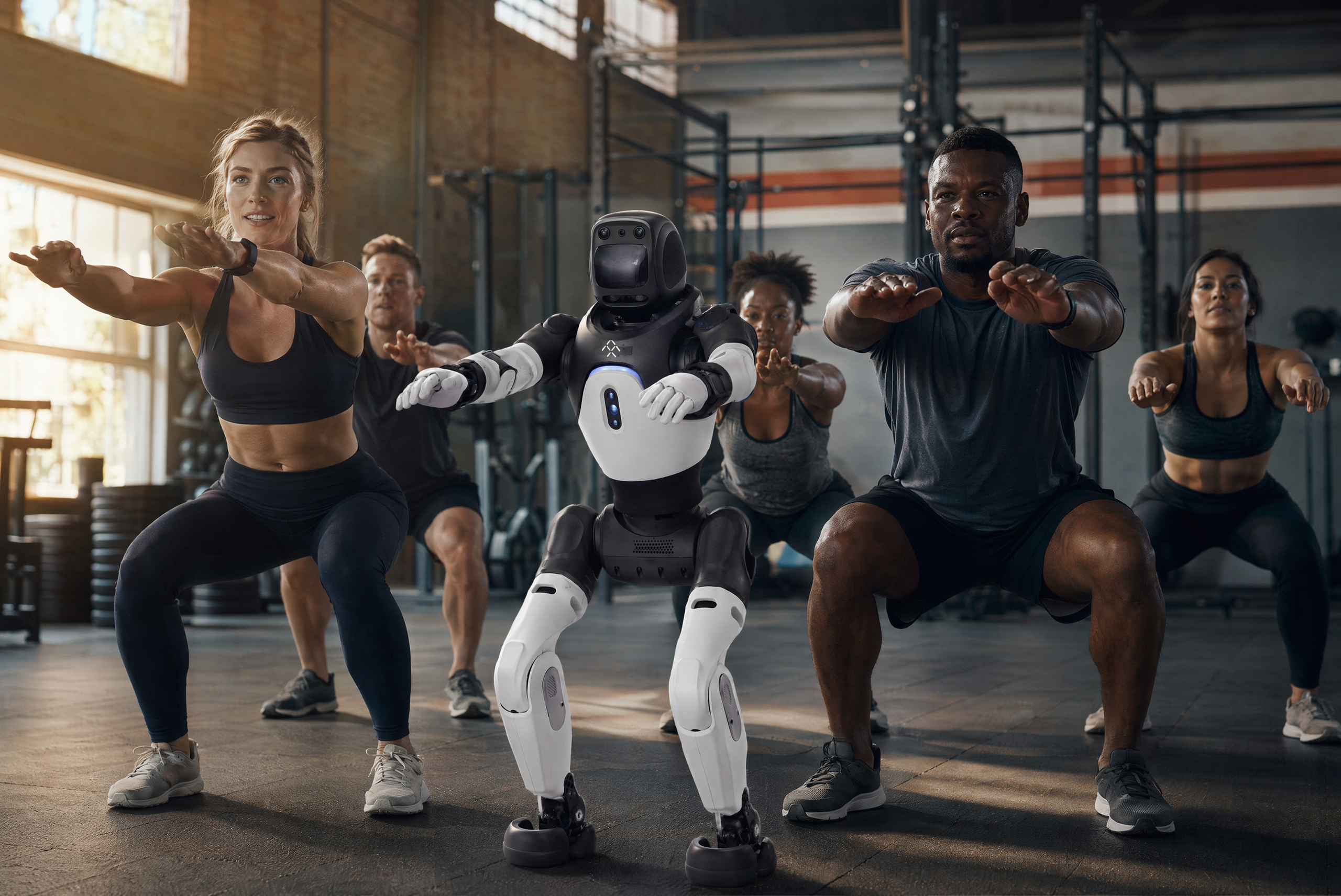
Most humanoid robots let you configure them. This one lets you build on them. If your team intends to write its own software rather than run what ships in the box, the Ultra is the model that opens up.
It shares the Master frame at 1310 mm and carries 30 degrees of freedom. What sets i apart is everything used to sense and think: an NVIDIA Orin NX 16 GB compute module rated at 157 TOPS, 3D LiDAR, a four-camera suite with depth, 4G and 5G connectivity, and VR teleoperation. Development runs on Ubuntu 22.04 with a full SDK, standardized APIs, Python-supported visual programming, and a simulation platform.
HEIGHT
1310 mm
WEIGHT
39 kg
DEGREES OF FREEDOM
30 DOF
ONBOARD COMPUTE
157 TOPS
RUNTIME
2 hours
PAYLOAD
3 kg max
The work
The configuration built to be developed on
The Ultra is the professional configuration of the Master series, aimed at research institutions, enterprise deployments, and teams that will write their own applications. It does everything the Edu does, and it adds the compute and the sensing that on-device work requires.
The upgrade to 30 degrees of freedom widens the movement envelope. The NVIDIA Orin NX 16 GB module supplies the processing headroom for on-device inference and custom model deployment, so work does not have to round-trip to a server. The sensor suite pairs 3D LiDAR with an interactive RGB camera, dual front RGB cameras, a rear RGB camera, and an RGB-D camera, which is what makes spatial awareness practical rather than theoretical.
Perception
3D LiDAR, four cameras including depth, a head touch sensor, and a high-precision 6-axis IMU. Obstacle avoidance to 50 mm.
On-device compute
NVIDIA Orin NX 16 GB rated by the manufacturer at 157 TOPS, for inference and custom model deployment without a network round trip.
Teleoperation
VR headset remote manipulation, with 4G and 5G connectivity alongside Wi-Fi and Bluetooth. Additional accessories are required for VR.
Secondary development
SDK and standardized APIs on Ubuntu 22.04, custom motion creation, application-level integration, Python-supported visual programming, and a simulation platform.
IN THE BOX
What comes with the system
These are compact humanoid systems, 1310 mm tall and under 40 kg. They walk, they hold a conversation, and they are built to be programmed. They are not material handling equipment, and the payload figure below is the honest limit on that.
- One humanoid robot device
- One remote controller
- Ecosystem Skill Package, which carries everything in the Master Edu package plus the items below
- Full secondary development through SDK and standardized APIs on Ubuntu 22.04
- Advanced visual programming platform with Python code support
- Openclaw no-code development tool
- Simulation development platform
- VR remote manipulation support
- Intellectual & Interactive and Locomotion & Manipulation platform access
Two things are supported but not supplied. VR remote manipulation requires additional accessories that do not come with the robot, and the auto-charging dock is optional. If either belongs in your deployment, say so early so the quote covers it rather than surprising you at delivery.
Listed as in development
Faraday Future lists the following as not yet released, to be delivered by future over-the-air update. They are not available at purchase.
- Companion mobile app
- Facial recognition, character profiles, custom knowledge base, wake word, and voice tone
- Motion remixing, video-to-motion, community sharing, and group choreography
PHOTOS
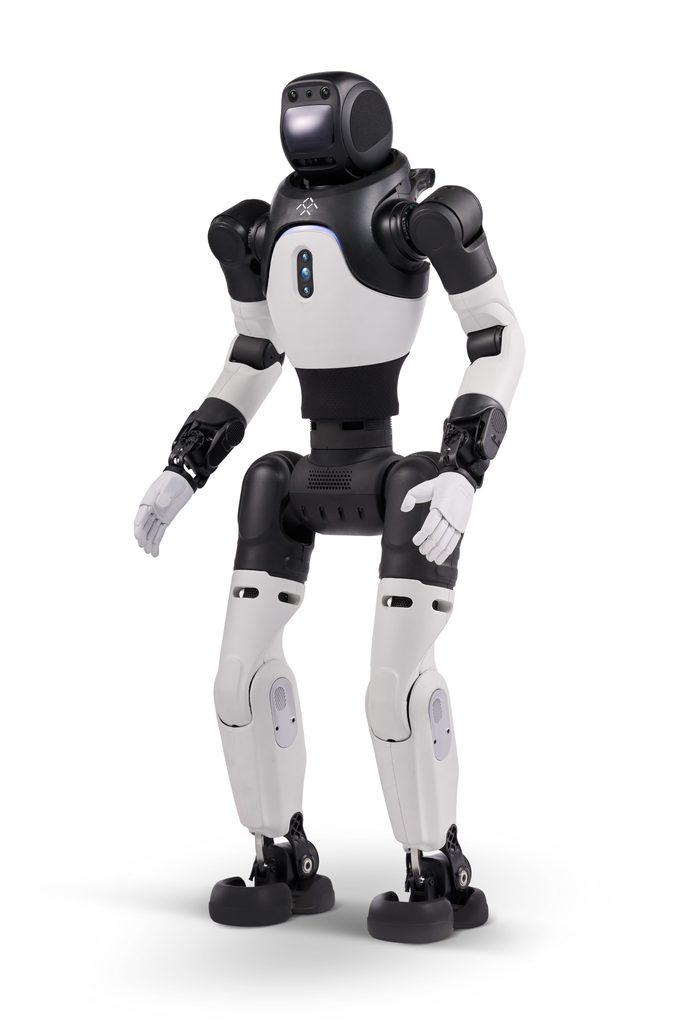
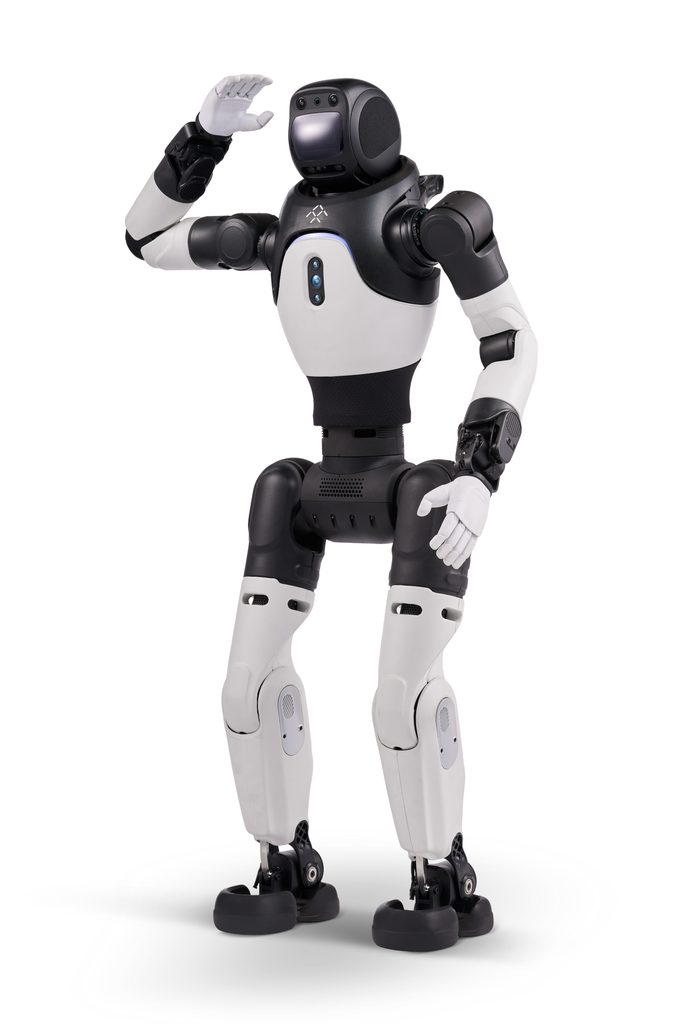
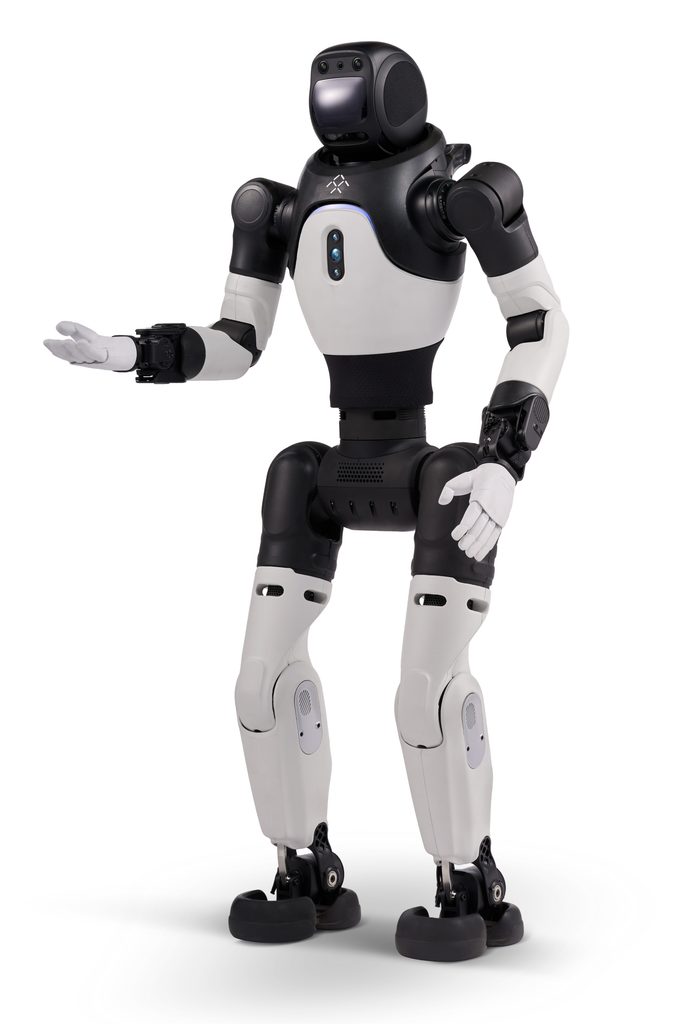
See the robot, in action
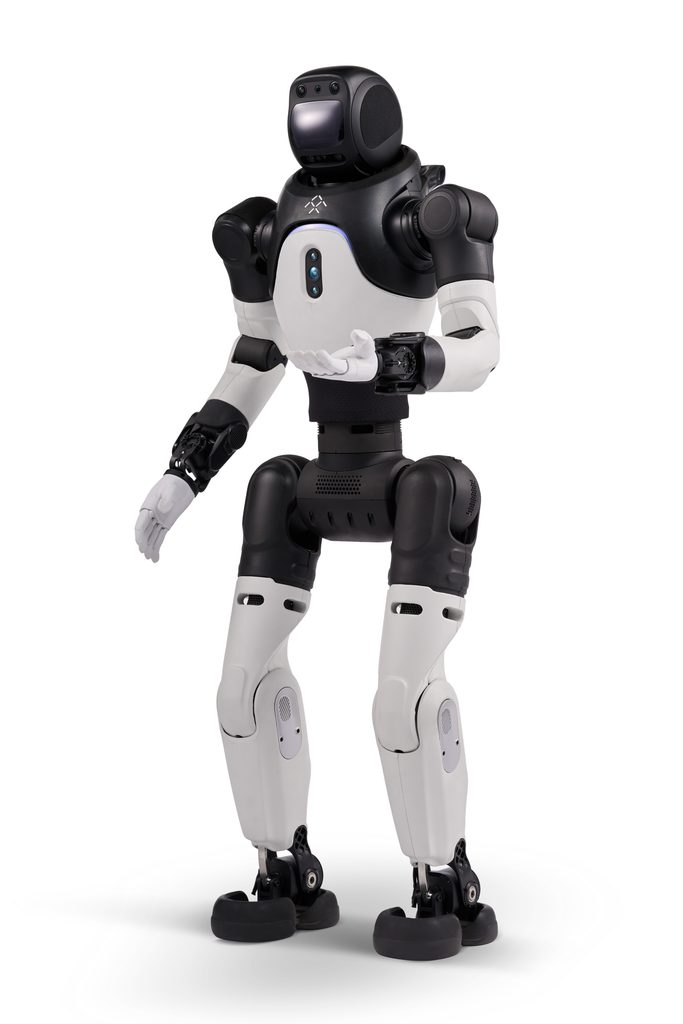
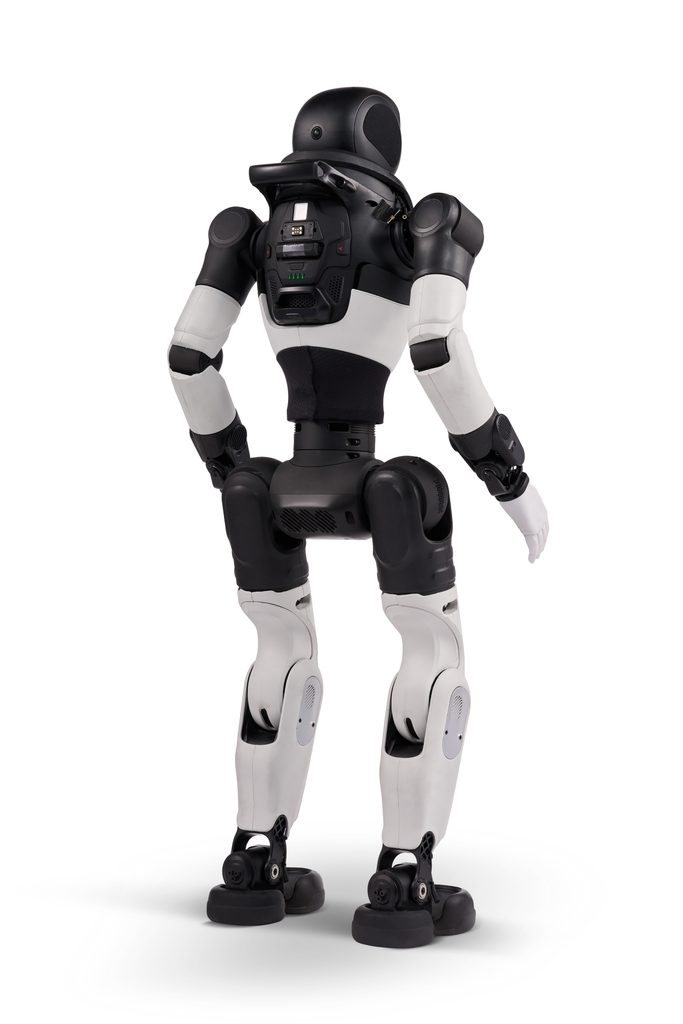
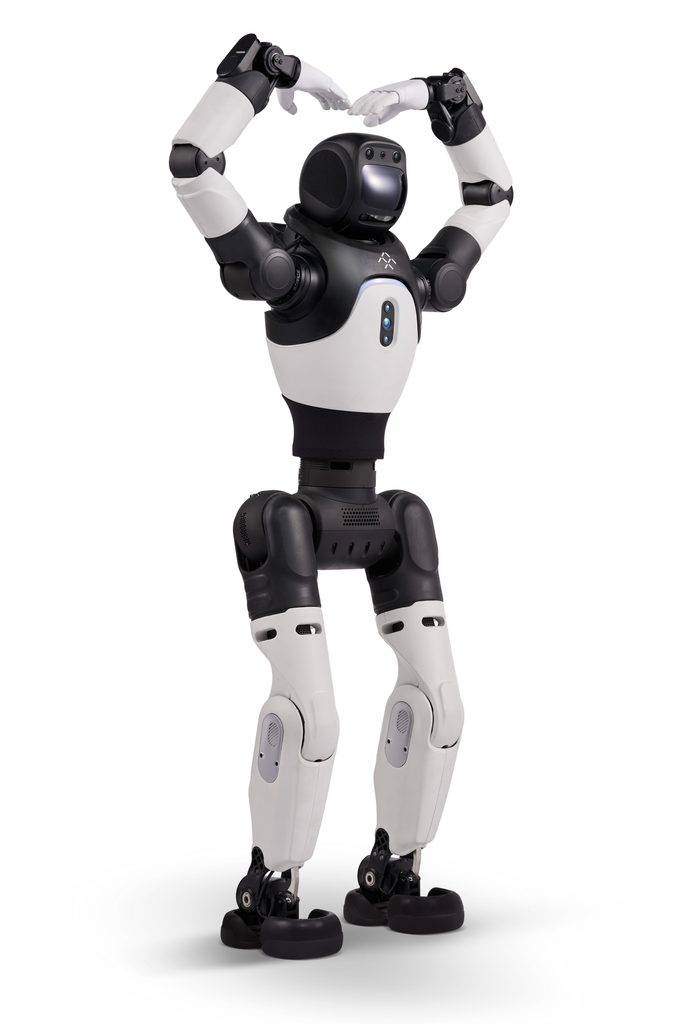
Specifications
FF Master Ultra specifications
Every figure below is supplied by Faraday Future. These are the manufacturer’s measurements under its own test conditions, not ours. Performance in your building will vary with terrain, temperature, load, and duty cycle.
| Physical | |
|---|---|
| Dimensions (H × W × L) | 1310 × 460 × 210 mm |
| Weight | 39 kg |
| Materials | Magnesium alloy, aluminum alloy, high-strength engineering plastics, and polyurethane |
| Degrees of freedom | 30 DOF, hands not included |
| Payload capacity | 3 kg maximum |
| Maximum movement speed | 1.8 m/s |
| Peak joint torque | 120 N·m |
| Computer | |
|---|---|
| Onboard compute | NVIDIA Orin NX 16 GB, rated at 157 TOPS |
| Power | |
|---|---|
| Battery capacity | Approximately 500 Wh |
| Power supply method | Direct charging, swappable battery, optional auto-charging dock |
| Runtime | 2 hours |
| Charging time | 1.5 hours or less |
| Runtime | Varies by application |
| Charger output | 54.6 V, 10 A |
| Input voltage | 110 V to 220 V |
| Sensing and interface | |
|---|---|
| Cameras | Interactive RGB camera, dual front RGB cameras, rear RGB camera, and RGB-D camera |
| LiDAR | 3D LiDAR |
| IMU | High-precision 6-axis |
| Ultrasonic sensors | Not equipped |
| Other sensors | Head touch sensor |
| Obstacle avoidance range | 50 mm or less |
| Display | Interactive screen with lighting effects |
| Connectivity and control | |
|---|---|
| Telecommunication | Wi-Fi, Bluetooth, 4G and 5G module |
| Controller | Included |
| Mobile app | In development |
| VR remote manipulation | Supported, additional accessories required |
| Capability | |
|---|---|
| Body motion | Head movement, upper-limb movement, waist movement, and walking |
| Conversation | Everyday topic conversation, environment and object questions and answers, and interactive object attribute queries |
| Performance | Singing, poetry recitation, greeting, greeting gesture, and head pat interaction |
| Software and development | |
|---|---|
| Secondary development | SDK and standardized APIs, custom motion creation, application-level integration, on Ubuntu 22.04 |
| Visual programming | Advanced visual programming platform with Python code support |
| Openclaw development tool | Supported |
| Simulation platform | Included |
| Platform access | Intellectual & Interactive platform and Locomotion & Manipulation platform, with continuous over-the-air feature unlocks |
| Over-the-air updates | Supported |
WHAT WE ADD
The hardware is where it starts
We are the distributor, and we are also the secondary developer and integrator. On a system this open, that second part is often the difference between a platform your team uses and a platform your team spends a semester standing up.
Secondary development
We build on the SDK so the system does your task on day one, and your team develops from a working baseline instead of an empty one.
On-site integration
We install in person, get the system onto your network, and test it in the space where it will run.
Operator training
Your researchers and staff run the system before we leave, and we stay reachable after that.
Procurement
What your purchasing office will ask for
Pricing depends on the configuration, the secondary development your work needs, and whether installation, training, VR accessories, and a charging dock are included. We put the whole thing in writing rather than quoting hardware alone.
Purchase orders are placed with Stokes Family Holdings, LLC, doing business as MOSO Robotics.
If you are working toward a grant deadline or a fiscal year close, tell us the date. It changes what we prioritize.
Ask us for
Manufacturer specification sheets for the exact model quoted
Current FCC certification and Covered List documentation
Warranty terms and what they do and do not cover
A written scope covering configuration, installation, and training
Lead time and what it depends on
Tell us what the robot needs to do
Describe the task and the space. We will tell you what fits, and we will tell you if nothing does.